
RadiatorDB
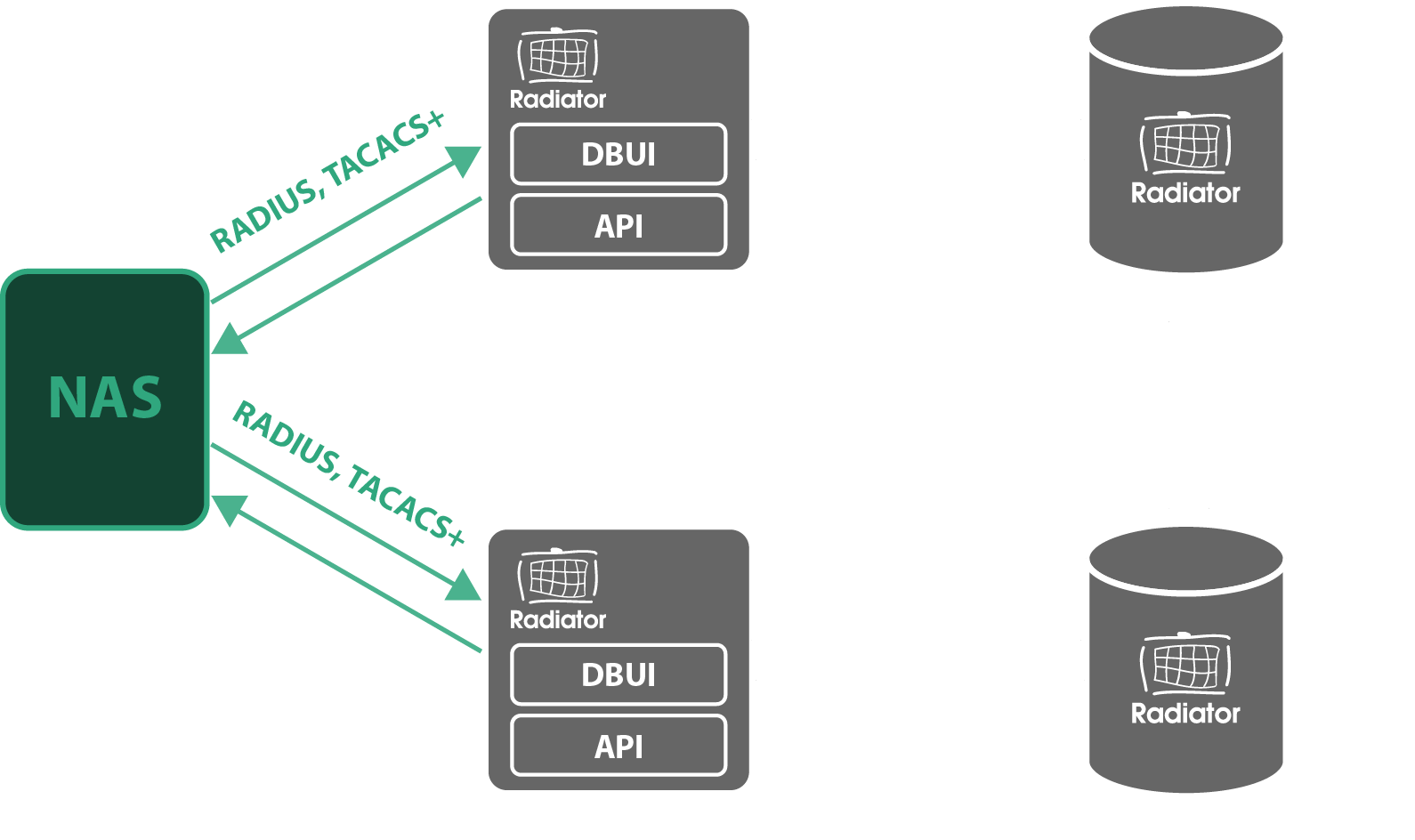
RadiatorDB is a built-in multimaster database solution for Radiator 10 products Radiator Policy Server and Radiator Core. Manage users, network clients and session data through Radiator UI or the REST API, with replication for high availability.
See details about architecture, key technical details and example use cases below.
Architecture
RadiatorDB is a document database built on PostgreSQL. It stores collections of JSON documents, allowing you to define data structures for users, network clients, accounting records and other data used or created by Radiator.
Each document has a key consisting of one or more values, unique within its collection. Retrieve documents using the complete key, selected key parts or document-field filters—for example, to find an individual subscriber or network clients associated with a site.
Radiator manages the underlying SQL schema. You define document fields and administration forms using Radiator’s radconf configuration syntax. Declared fields provide consistent validation across Radiator UI, REST API and AAA pipeline writes; collections without declared payload fields accept flexible JSON documents.
Manage records manually in Radiator UI or automate provisioning through the REST API. Radiator’s AAA pipelines can read and write documents directly, connecting stored profiles and session data to authentication, authorisation and accounting workflows.
Technical information
Multi-master support
- Write to any configured node; changes replicate automatically to other nodes.
- Support high availability and horizontal read scaling.
- Resolve concurrent write conflicts using a last-writer-wins strategy.
- Replication is asynchronous. Use the same node for writes and reads that must immediately reflect those writes.
REST API and database UI
- Automate provisioning from CRM and other business systems through the REST API.
- Create, view, update and delete records in Radiator UI.
- Configure forms with field types such as text, password and number.
- Control read, write and action permissions through roles.
- Define operational actions, such as sending CoA or Disconnect requests, for authorised users.
Revision history and audit log
- Review changes and restore earlier document versions in normal collections.
- Configure revision retention by age or count.
- Export and import full or selected collections for backup, recovery and transfer between environments.
Automatically expiring documents
- Set expiry times for temporary data such as session records. Expired documents are no longer returned by queries.
Automatic SQL schema management
- Radiator creates and manages the required database structures and replication configuration.
- PostgreSQL is installed separately. The supported deployment requires dedicated PostgreSQL 18 or later instances.
RadiatorDB UI
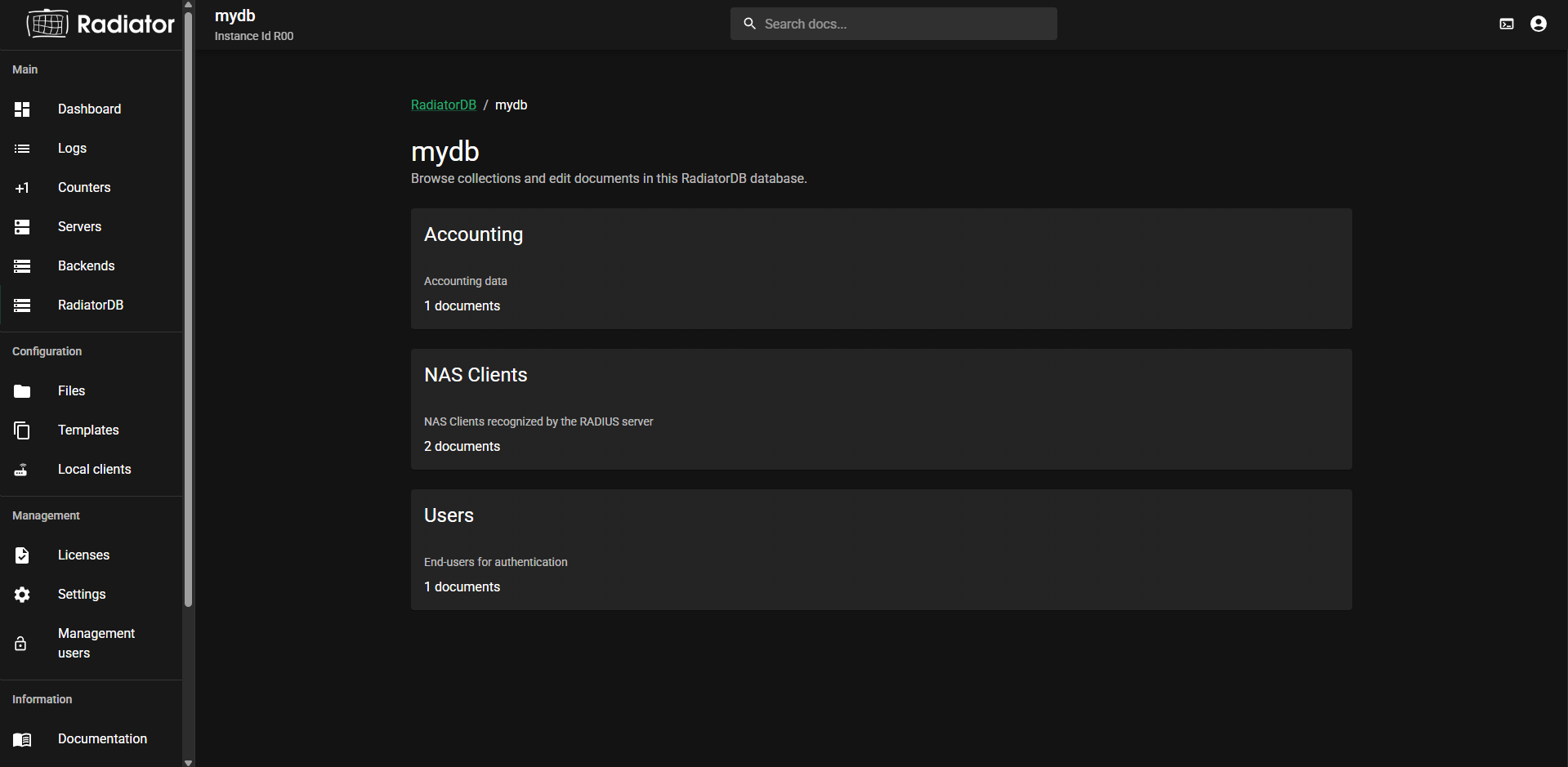
RadiatorDB Collections overview
In RadiatorDB, you can define the data structure that best suits you, with the Radiator configuration.
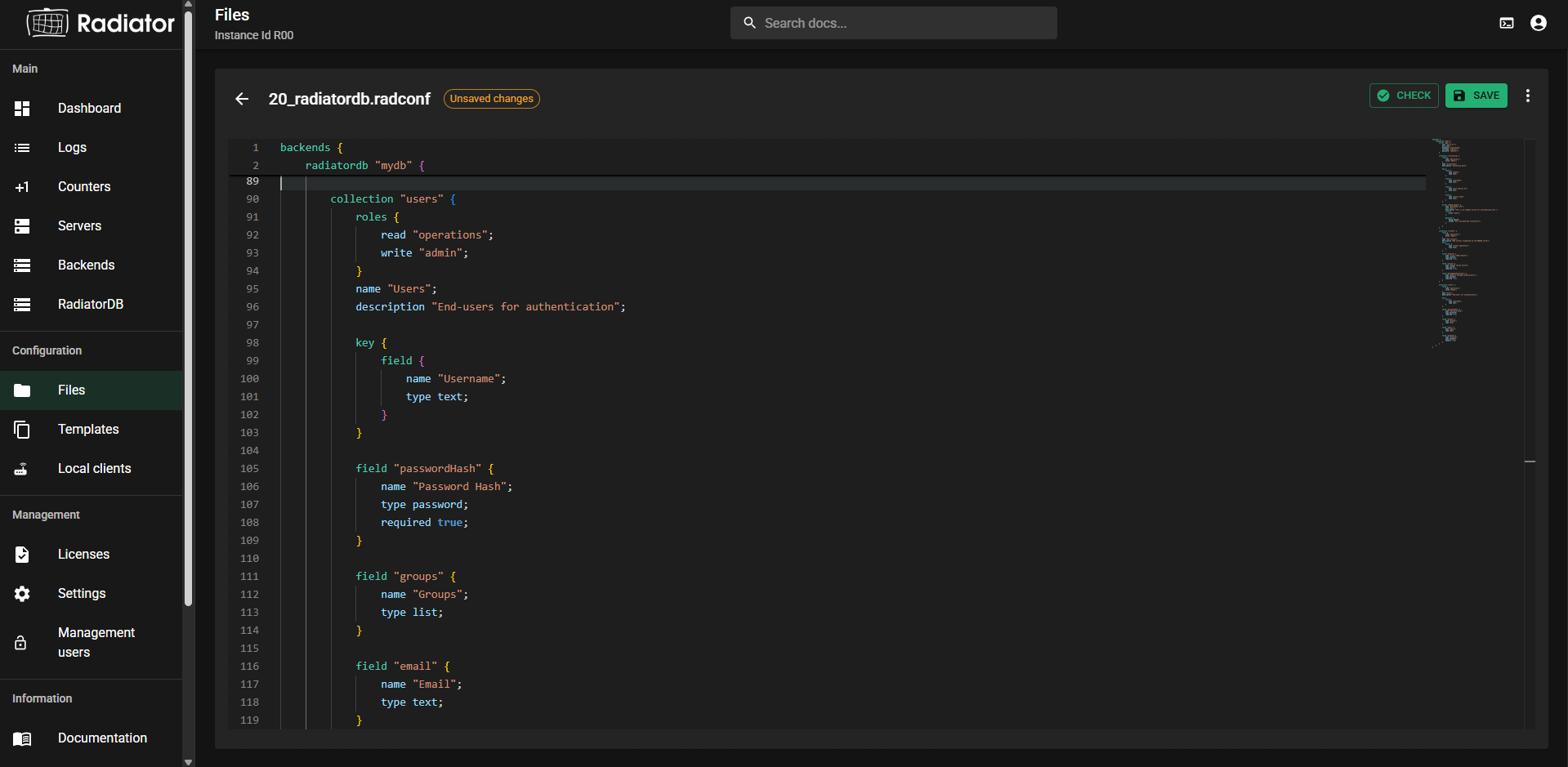
RadiatorDB configuration
In RadiatorDB, you can define the data structure that best suits you, with the Radiator configuration.
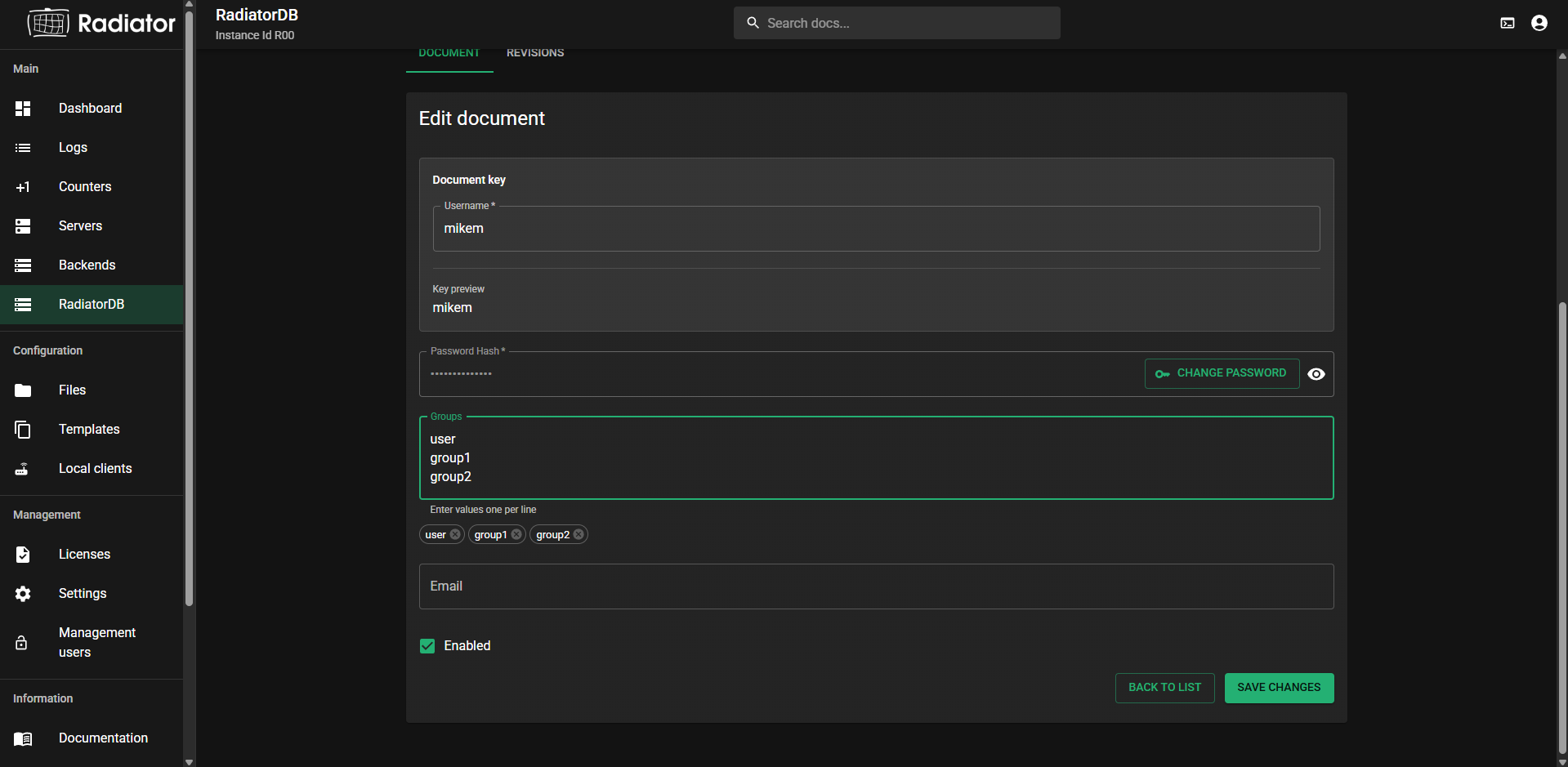
Create users in RadiatorDB
RadiatorDB offers manual provisioning capabilities for creating users and clients.
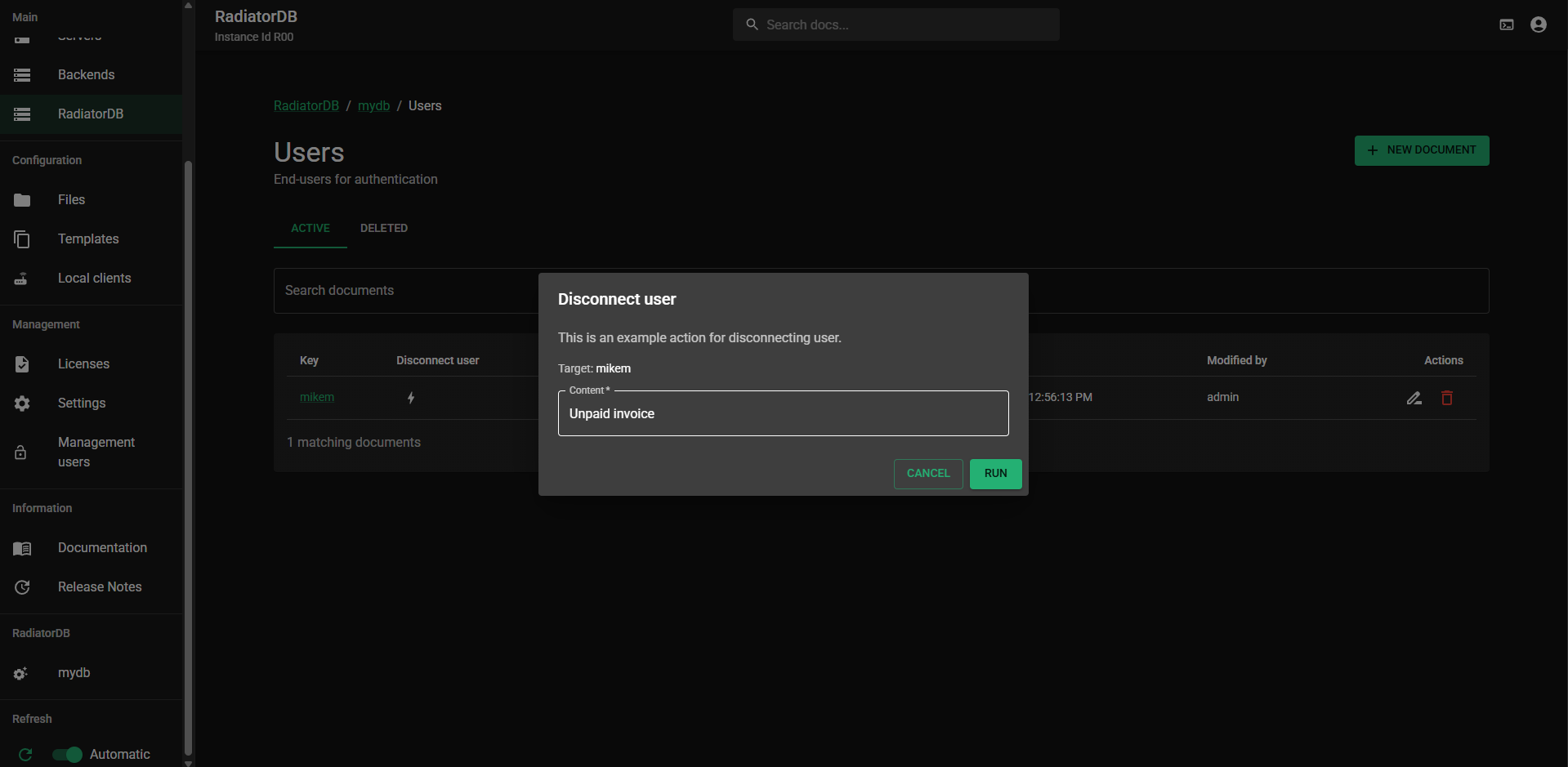
RadiatorDB CoA
RadiatorDB allows defining custom actions that the server performs on button press from RadiatorDB admin. Here is an example of disconnecting user with CoA request.
Popular use cases
Fixed broadband authentication
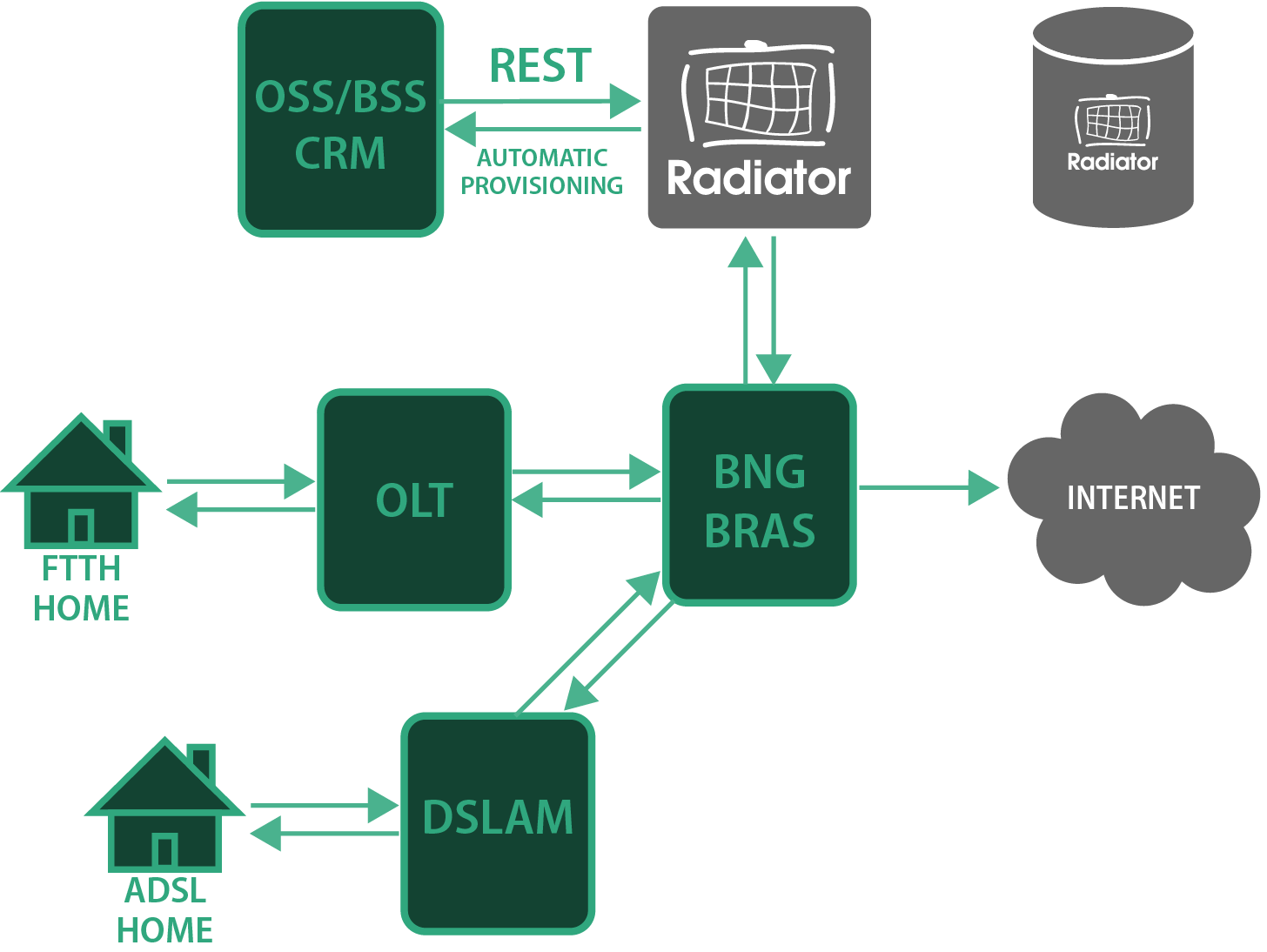
Fixed broadband authentication has been a bread-and-butter use case for Radiator’s RADIUS servers for decades. With the release of RadiatorDB, customers now gain the option of utilising a built-in database solution that is replicated for high-availability and optimised for AAA deployments.
With RadiatorDB, the provisioning of subscribers and clients can be done both automatically from CRM or similar system via REST API, or manually from the Radiator UI.
In a fixed-line authentication deployment powered by Radiator Core and RadiatorDB, operations teams can manage connected users and trigger Change of Authorisation calls for selected users from the Radiator UI.
Looking for more?
More information RadiatorDB:
Already got a licence?